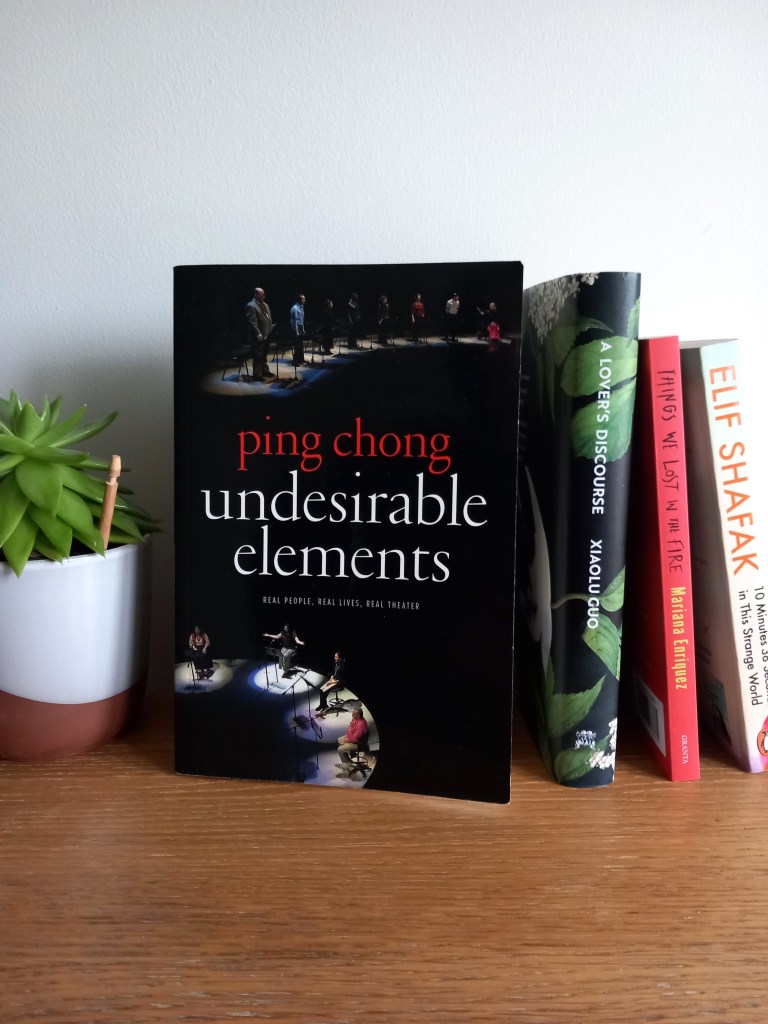
I find that stories can be so much more visceral when performed on stage in the theatre. The interwoven stories told in Inside/Out take you on an emotional rollercoaster on the page, so it must have been something special to see live.
Ping Chong’s approach to community theatre as part of the Undesirable Elements project is a brilliant way of showcasing a narrative timeline of disability history that is engaging and fast-paced. Verbatim theatre uses extracts from interviews with people who have specific real-life experience to create a play script. For this project, the interviewees also performed the finished work on stage.
Each of the actors describe the obstacles put in their path, building a picture of progress in the face of adversity. Sometimes they successfully advocate for change. Sometimes they have no power to alter the outcome. Sometimes they are forced to give up something of their lives. We learn what it is like for the characters to find meaningful work, seek support from family, and live with a body impacted by physical disability or illness.
An impressive amount of social history is referenced by the anecdotes in the play, from a family opposing institutionalisation of their son in the 1950s, to the actions that led to the American Disabilities Act being signed into law in 1990, and the impact this Act had on the performers. There is the stark experience of a child having to be a carer to his mother and each performer is asked what they think about the term ‘disability’, with a breadth of positive, neutral, and negative connotations associated with the word in their responses.
Inside/Out is a brilliant portrayal of the lives of American disabled people. Other plays in the Unspeakable Elements volume take the same conceptual approach to stories of migrants and refugees, with a particularly innovative script involving multiple languages. A warning that these plays contain a lot of heavy content including racism, ableism, sexism, war, violence, sexual assault, domestic abuse, neglect, and death. Ping Chong + Company’s approach to this series of works is considerate and, crucially, gives power to those with lived experience of these subjects to tell their own stories in their own words.
 Tori Pearmain